- It begins with a private yacht charter to the UNESCO-listed Komodo National Park.
- It traverses the island’s cultural heartland, visiting the ancestral villages of the Manggarai and Ngada people.
- The itinerary culminates with a pre-dawn ascent to witness the sunrise over Kelimutu Volcano’s tri-colored crater lakes.
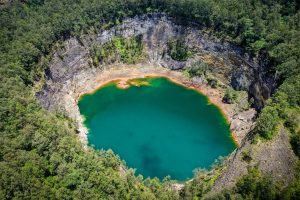
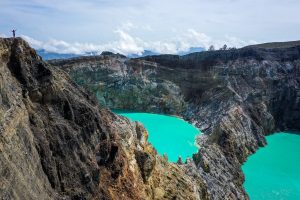
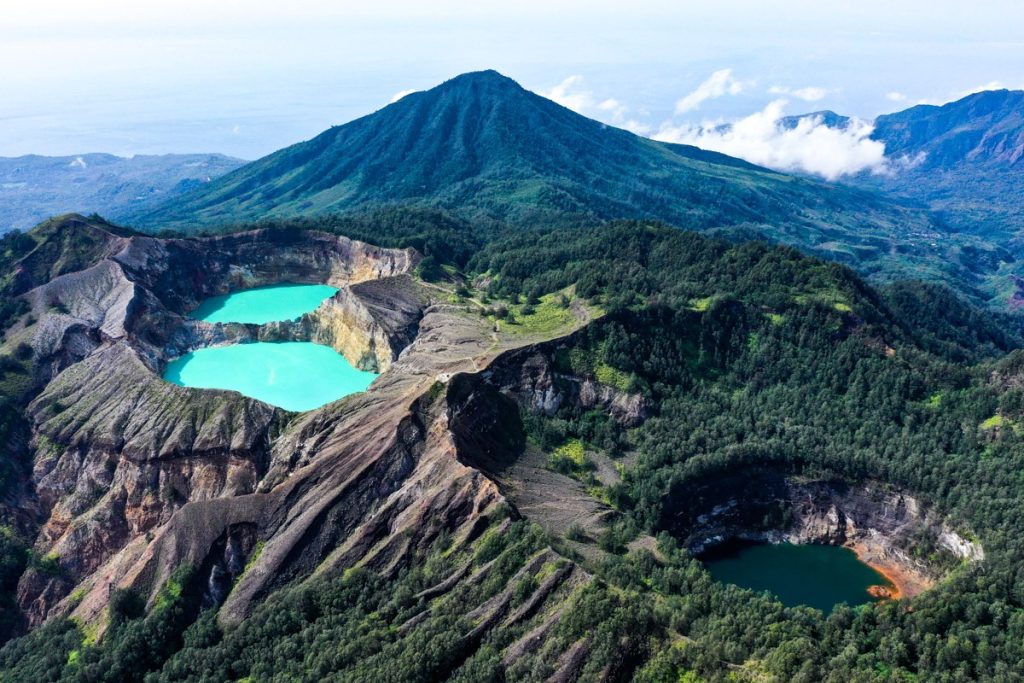
The air is thin, cool, and carries the faint, sharp scent of sulfur. It’s 5:30 AM, and a velvety blackness still cloaks the peak of the Kelimutu volcano. Below, a sea of clouds blankets the sleeping villages of Flores. Then, a sliver of incandescent orange breaches the horizon. It spills across the sky, slowly unveiling the spectacle before you: three adjacent volcanic lakes, each a distinct and impossible color. One is a deep turquoise, another a brooding, almost-black green, and the third a milky jade. This is the moment that defines a journey across Flores, an island where nature’s alchemy and ancient mysticism are one and the same.
Day 1: Of Dragons and Coral Gardens in Labuan Bajo
Your Flores expedition commences not with a rugged trek, but with the civilized hum of a turboprop aircraft descending into Komodo Airport (LBJ) in Labuan Bajo. This once-sleepy fishing village has transformed into a sophisticated launching point for exploring one of the planet’s most biodiverse marine environments. A private transfer whisks you away from the burgeoning bustle to the serene sanctuary of AYANA Komodo Waecicu Beach, the island’s first and only five-star resort. From its vantage point, the Kukusan Islands dot a sapphire sea. After settling in, your real adventure begins at the resort’s private pier. Here, you will board a chartered phinisi, a traditional two-masted Indonesian sailing ship reimagined as a luxury vessel for the day. Your captain, a seasoned local named Anton, charts a course for Rinca Island, a less-crowded alternative to Komodo for your primary objective: an encounter with the formidable Komodo dragon. These prehistoric reptiles, which can grow up to 3 meters in length and weigh 70 kilograms, are the world’s largest lizards. A guided walk with a park ranger, who are the only people authorized to lead tours, ensures a safe and informative viewing. By midday, you are back on the water, dropping anchor at Manjarite for a snorkeling session in crystalline waters teeming with clownfish and parrotfish. The day’s final stop is the iconic Pink Beach, or Pantai Merah, whose rosy hue comes from the crushed red organ pipe coral mixed with the white sand, a phenomenon detailed by Indonesia’s official tourism board. As the sun dips low, you return to the resort for cocktails at the UNIQUE Rooftop Bar, followed by a seafood dinner at Kisik Grill, your feet in the sand, recounting a day spent with dragons and coral.
Day 2: Weaving Through the Highlands to Ruteng
Today, the Flores overland journey begins in earnest. After breakfast, you will meet your driver and guide, who will be your companions for the next four days. The vehicle is a modern, air-conditioned 4×4, essential for understanding the Trans-Flores Highway, a road that serpentines for over 660 kilometers across the island. The first leg is a roughly four-hour, 130-kilometer drive from Labuan Bajo to the cool highland town of Ruteng. The landscape shifts dramatically from dry coastal savanna to lush, terraced mountainsides. Your primary stop is near the town of Cancar to witness the Lingko rice fields. From a high vantage point, these fields reveal a mesmerizing pattern, resembling a colossal spiderweb. Our guide, Agustinus, a Manggarai local, explains, “This is not just for beauty. The Lingko system is a traditional method of communal land distribution, where the center point, or lodok, marks the spot for rituals, and the radiating lines divide the land fairly among families.” It’s a living piece of agricultural heritage. For lunch, your guide has pre-arranged a meal at a local family’s home, a curated experience that bypasses the simple roadside warungs for an authentic taste of Manggarai cuisine, featuring red rice and chicken cooked in bamboo. You arrive in Ruteng, perched at an elevation of 1,200 meters, in the late afternoon. The air is crisp and cool. Your accommodation is at Spring Hill Bungalow, a boutique guesthouse known for its hospitality and panoramic views, representing the best available lodging in this remote but charming town.
Day 3: Ancestral Villages and Volcanic Springs of Bajawa
The journey continues east, a 135-kilometer drive from Ruteng to Bajawa that will take approximately four to five hours, not accounting for the essential stops along the way. This region is the heartland of the Ngada people, whose unique culture is preserved in a string of ancient villages. Your destination is Bena, the most famous and visually arresting of these settlements. As you step into the village, you are entering a space governed by animist beliefs that have endured for centuries. The village is arranged in two parallel rows of high-thatched houses, with a central courtyard containing megalithic stone structures, ancestral graves, and pairs of symbolic shrines. The ngadhu, a parasol-like structure, represents the male ancestor, while the bhaga, a small hut-like structure, symbolizes the female ancestor. These are not relics; they are the center of the village’s spiritual life. Bena is also on the Tentative List for UNESCO World Heritage status, a sign of its cultural significance. While Bena is a must-see, your guide will also take you to the smaller, less-visited village of Luba, offering a more intimate glimpse into daily life. Here, you can observe women weaving the region’s intricate ikat textiles on back-strap looms, a process that can take months for a single piece. The day of cultural immersion concludes with a well-earned reward: a soak in the Malanage Hot Springs. Here, a steaming volcanic river converges with a cool freshwater stream, allowing you to find the perfect temperature. Your lodging for the night is Manulalu Jungle, a collection of stylish bungalows offering commanding views of the Inierie Volcano, providing a comfortable and scenic base in the Bajawa highlands.
Day 4: The Blue Stone Coast to the Foothills of Kelimutu
Leaving the cool air of Bajawa, the Trans-Flores Highway descends towards the southern coast and the town of Ende. The four-hour, 120-kilometer drive offers a new set of dramatic vistas. Before reaching Ende, you will stop at Penggajawa Beach, often called the Blue Stone Beach. The shoreline is not sand but a vast expanse of smooth, sea-tumbled stones in varying shades of blue, turquoise, and green. For decades, local villagers have made a living by collecting and sorting these stones, which are then sold for use in landscaping and decorative mosaics across Indonesia and beyond. It’s a striking example of a local economy built directly from a unique geological feature. You’ll have lunch in Ende, a historically significant port town where Sukarno, Indonesia’s first president, was exiled by the Dutch from 1934 to 1938. It was here he is said to have formulated the principles of Pancasila, the official state philosophy. From Ende, the final leg of the day’s journey begins: the ascent to Moni. This two-hour, 50-kilometer drive is a steep and winding climb into the mountains that form the base of the Kelimutu volcano. You will check into the Kelimutu Crater Lakes Eco Lodge, the premier accommodation in the area. While luxury here is defined more by location and sustainability than by five-star amenities, it offers comfortable rooms, attentive service, and the closest proximity to tomorrow’s main event. As you plan for an early start, it’s wise to consider all aspects of the trip; for a detailed breakdown, see our guide on Kelimutu Lake Costs & What to Budget. An early dinner is followed by an early night, the anticipation for the dawn palpable.
Day 5: The Alchemical Dawn at Kelimutu Volcano
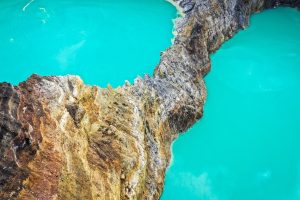
The wake-up call comes at 4:00 AM. In the pre-dawn darkness, you’ll drive 45 minutes up the volcano’s winding road to a parking area, from which it’s a straightforward 30-minute walk to the main viewpoint at an elevation of 1,639 meters. As you find your spot, the eastern sky begins to glow, and the three crater lakes of the mighty kelimutu lake slowly reveal their forms. The sight is otherworldly. The lakes, known in the local Lio language as Tiwu, are believed to be the final resting place for souls. According to local lore, Tiwu Ata Mbupu (Lake of Old People) is where the souls of the elderly rest, Tiwu Nuwa Muri Koo Fai (Lake of Young Men and Maidens) is for the young, and Tiwu Ata Polo (Bewitched or Enchanted Lake) is for wrongdoers. Scientifically, their shifting colors—from turquoise, green, and blue to red, brown, and black—are caused by the chemical reactions of volcanic gases and dissolved minerals, a process known as upwelling. For a comprehensive overview of this natural wonder, our The Kelimutu Lake Flores Guide to Kelimutu Lake is an essential resource. You will spend an hour or two at the summit, watching the colors intensify as the sun climbs higher. After descending, a well-deserved breakfast awaits back at the lodge. The final part of your journey is the 95-kilometer, 2.5-hour drive to Maumere and the Fransiskus Xaverius Seda Airport (MXR) for your onward flight, leaving with the vivid memory of Flores’s volcanic soul imprinted in your mind.
Quick FAQ for Your Flores & Kelimutu Journey
What is the best time of year for a Flores itinerary featuring the Kelimutu volcano? The ideal time is during the dry season, which typically runs from April to October. During these months, you can expect clear skies, especially for the sunrise at Kelimutu, and road conditions along the Trans-Flores Highway are at their best. The peak months are July and August, with visitor numbers reflecting this.
Is Flores safe for luxury travel? Absolutely. When arranged through a reputable operator with experienced guides and private transportation, Flores is very safe. The tourism infrastructure, particularly in Labuan Bajo, has seen significant investment in the last decade. While the overland journey is adventurous, it is a well-established route with improving facilities.
How much should I budget for a trip like this? A 5-day luxury itinerary involving private yacht charters, a dedicated 4×4 vehicle and guide, and stays at the best-available high-end and boutique accommodations will require a significant investment. You should expect to budget upwards of $5,000 to $7,000 per person, excluding international flights. For detailed financial planning, you can Plan Your Kelimutu Lake with our budgeting tools.
Can I fly directly to Kelimutu? No, there is no airport in the immediate vicinity of the volcano. The closest airports are in Ende (ENE), about 50 kilometers away, and Maumere (MXR), about 95 kilometers away. The overland journey from Labuan Bajo, or a shorter version from Ende or Maumere, is an integral part of the Flores experience, as detailed in the geography of the region.
A journey across Flores is far more than a simple vacation; it is an immersion into a world where landscapes are raw, cultures are deeply rooted, and nature performs its most spectacular magic. This is not an island you simply see; it is an island you experience, from the primeval presence of Komodo dragons to the profound spiritual energy of its ancestral villages. The tri-colored wonder of kelimutu lake is the final, magnificent crescendo of a symphony of unique and unforgettable moments. Let us help you compose your own Flores masterpiece.