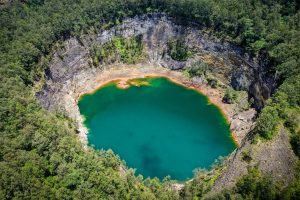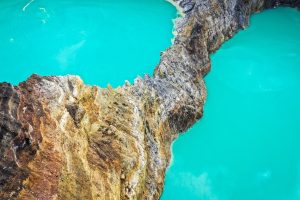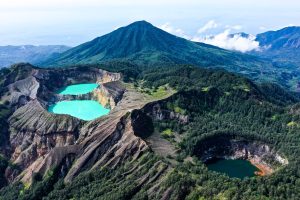
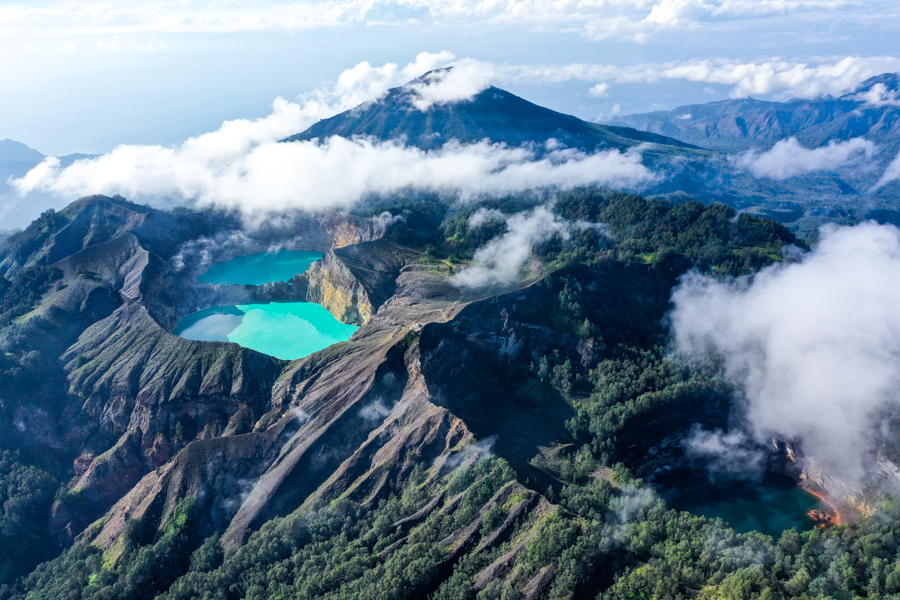
The pre-dawn chill at 1,639 metres above sea level sharpens the air, carrying the faint scent of sulfur and damp earth. Below, the three craters lie in darkness, their depths concealing the daily spectacle of Kelimutu’s colour-changing waters. This is the moment before the sun crests the eastern horizon, painting the sky and illuminating one of Indonesia’s most geologically dynamic landscapes.
Seasonal Rhythms and Optimal Visitation Windows
Understanding Kelimutu’s seasonal patterns is crucial for planning an effective visit. The dry season, spanning from May to September, consistently offers the most favourable conditions. During these months, rainfall is minimal, and skies are typically clear, providing unobstructed views of the crater lakes. This period aligns with the peak travel season for Flores Island, ensuring better road conditions for overland routes from Ende or Maumere. Conversely, the wet season, from October to April, brings increased precipitation, higher humidity, and a greater likelihood of fog or cloud cover obscuring the lakes. While a visit during the wet season is not impossible, it demands flexibility and an acceptance of potentially reduced visibility. The Kelimutu volcano is located about 50 km east of Ende, the capital of Ende Regency in East Nusa Tenggara, Indonesia. The dry season also sees more consistent local transportation options and guides available in Moni village, the primary access point for the national park. Early morning visits are paramount regardless of the season, but even more so during transitional months to maximize the chance of clear skies before midday atmospheric changes.
Why Dry Season Dominates for Kelimutu Lake Views
The advantages of a dry season visit extend beyond mere visibility. Trekking paths within Kelimutu National Park are less slippery and more accessible. The risk of sudden downpours disrupting sunrise viewing or causing delays on the journey from Moni is significantly reduced. This stability allows for better photographic opportunities, capturing the lakes’ vibrant hues under optimal light. The three coloured lakes of Kelimutu are situated on the summit of a volcano on central Flores Island in Indonesia. The combined surface area of the three Kelimutu crater lakes is approximately 1,051,000 square metres with a total water volume of about 1.292 million cubic metres. While daily temperatures can still be cool at dawn, the overall pleasantness of the weather during the dry months enhances the entire experience. It is important to note that even in the dry season, mornings at elevation are cool, necessitating layers of clothing.
Daily Timing: The Sunrise Imperative
For Kelimutu, the specific time of day is as critical as the season. Sunrise is not merely a preference; it is the definitive window for experiencing the lakes in their full grandeur. Most visitors aim to arrive at the Kelimutu National Park entrance gate between 4:00 AM and 4:30 AM. This allows sufficient time to purchase tickets and complete the approximately 30-minute walk from the parking area to the various viewpoints overlooking the craters. Witnessing the transition from pre-dawn darkness to the first rays of sun illuminating the lakes is a profound experience. The changing light reveals the distinct colours of the three volcanic crater lakes, whose colours periodically change due to chemical reactions involving dissolved minerals and volcanic gases. By mid-morning, typically after 8:00 AM, the crowds increase, and atmospheric haze or fog can begin to obscure the views, particularly during the shoulder seasons.
Understanding the Moni-Kelimutu Ascent
The journey from Moni village to the Kelimutu viewpoints requires careful timing. Most guesthouses in Moni arrange shared transport (ojeks or cars) departing between 3:30 AM and 4:00 AM. The drive itself takes roughly 45 minutes to an hour, depending on road conditions and the specific drop-off point within the park. Kelimutu National Park, which contains the Kelimutu crater lakes, is located on Flores Island in East Nusa Tenggara province, Indonesia. Arriving early ensures a prime viewing spot at the designated platforms, which can become crowded as the morning progresses. It also provides a buffer against unforeseen delays, such as minor road issues or queues at the park entrance. The highest peak in Kelimutu National Park is Mount Kelibara, with an elevation of 1,731 metres, offering another perspective on the surrounding landscape. After sunrise, many visitors spend an additional hour or two exploring the different viewpoints and enjoying the cooler morning air before returning to Moni for breakfast.
Weather Variables and Local Conditions
Despite the general predictability of the dry season, local weather at Kelimutu can be localized and dynamic. Mountainous regions are prone to microclimates, and even on a seemingly clear day, pockets of fog can settle over the craters. Checking local forecasts in Moni the evening prior to your visit is advisable, though these can sometimes be unreliable for specific mountain conditions. During the dry season, daytime temperatures can reach 25-30°C in Moni, but at the crater rim, early morning temperatures often hover between 10-15°C, necessitating warm layers. Kelimutu volcano is located about 50 km east of Ende, the capital of Ende Regency in East Nusa Tenggara, Indonesia. Wind can also be a factor, adding to the chill. The absence of significant cloud cover is the primary determinant for a successful sunrise viewing. While the lakes’ colours are an intrinsic feature, their vibrancy is greatly enhanced by direct sunlight.
Flores Overland Considerations and Accessibility
For those undertaking a Flores overland journey, integrating Kelimutu into the itinerary requires strategic planning. The dry season not only benefits Kelimutu itself but also ensures smoother travel along the Trans-Flores Highway, which connects major towns like Labuan Bajo, Ruteng, Bajawa, Ende, and Maumere. Road conditions can deteriorate significantly during the wet season, leading to longer travel times and potential disruptions. The accessibility to Moni village, the gateway to Kelimutu, is generally consistent, with public buses and private vehicles plying the routes from Ende and Maumere. The three coloured lakes of Kelimutu are situated on the summit of a volcano on central Flores Island in Indonesia. For those travelling from Ende, Moni is approximately 50 kilometres east. From Maumere, the journey is longer, typically around 100-120 kilometres to the west. Planning an overnight stay in Moni is almost universally recommended to facilitate the early morning ascent to the lakes.
Beyond the Sunrise: Midday and Afternoon Perspectives
While sunrise is unequivocally the prime viewing time, a visit to Kelimutu can extend into the mid-morning or even early afternoon, offering different perspectives. After the initial rush, the crowds thin out, and the quality of light changes, revealing new nuances in the lakes’ colours. The combined surface area of the three Kelimutu crater lakes is approximately 1,051,000 square metres with a total water volume of about 1.292 million cubic metres, providing ample surface to reflect the changing light. However, the risk of cloud cover increasing steadily from late morning onwards means that this secondary viewing window is less reliable. The Kelimutu National Park, which contains the Kelimutu crater lakes, is located on Flores Island in East Nusa Tenggara province, Indonesia. For photographers, the midday sun can be harsh, creating strong contrasts, but it can also illuminate the lakes with an intensity not seen at dawn. Always prioritize the sunrise visit, but consider a relaxed re-exploration if conditions permit and time allows.
The experience of Kelimutu Lake is a sign of nature’s dynamic forces, an ever-shifting canvas of geological artistry. Timing your visit to align with the dry season and the pre-dawn hours ensures the most profound encounter with its unique colours and serene beauty. For further insights into planning your journey across Flores and its volcanic wonders, explore our comprehensive guides on kelimutulake.com.
[1] [2] [3] [4]