- For grand-scale volcanic drama and established infrastructure, select Mount Bromo.
- For a serene, culturally rich experience and a one-of-a-kind natural phenomenon, choose Kelimutu.
- For discerning travelers valuing exclusivity and a journey off the beaten path, Kelimutu is the superior choice.
The air is thin, chilled, and carries the faint, sharp scent of sulfur. It’s 4:30 AM, and you are standing in the profound quiet of pre-dawn, a thousand miles from the familiar. Before you, a vast darkness waits. Is it the immense, sandy caldera of an active supervolcano, surrounded by a pantheon of smoldering peaks? Or is it the rim of a sacred mountain, where three crater lakes hold the spirits of the departed, their waters shifting in color with the whims of geology and mood? This is the central question for anyone planning a journey to Indonesia’s volcanic heartlands: the choice between the raw power of Mount Bromo in East Java and the ethereal mystery of the Kelimutu Lake on the island of Flores. As a travel editor, I’ve been fortunate to witness both sunrises, and I can tell you the decision isn’t about which is better, but which experience is yours.
The Core Experience: Geochemical Alchemy vs. Volcanic Grandeur
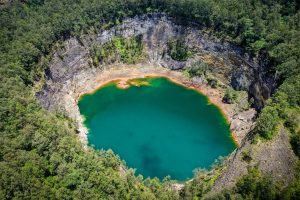
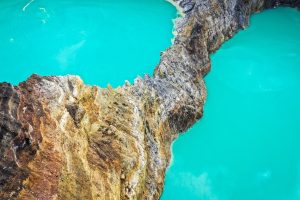
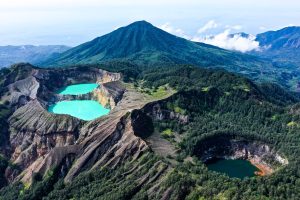
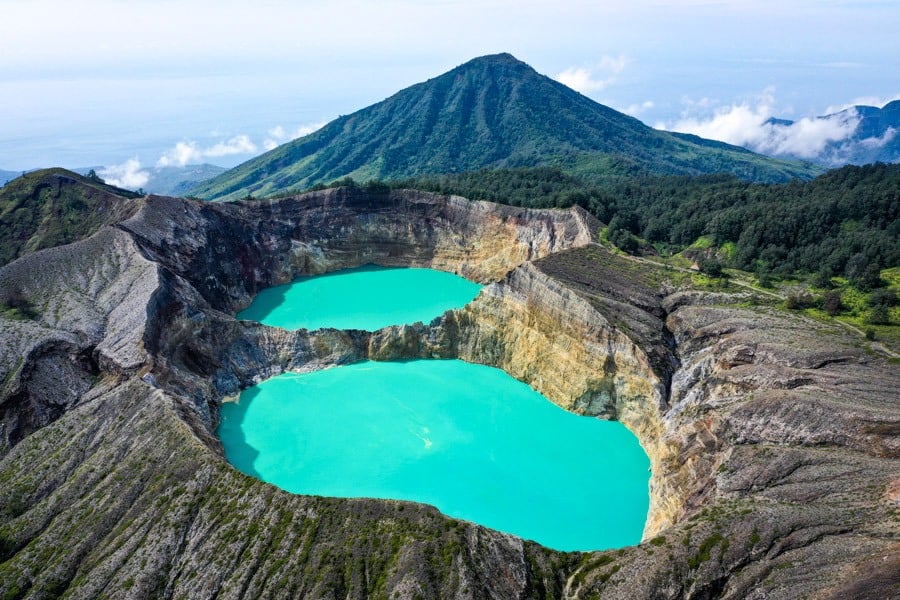
At the heart of the Kelimutu Crater Lakes vs Mount Bromo debate lies the fundamental difference in what you see and feel at the summit. Kelimutu’s allure is specific, almost intimate. You arrive at the 1,639-meter peak to witness a geological marvel: three distinct crater lakes, side-by-side, each a different, often vibrant, color. These are not static hues; they change over time due to the upwelling of volcanic gases reacting with the minerals in the water. I’ve seen Tiwu Ata Mbupu (Lake of Old People) as a deep, obsidian black, while its neighbor, Tiwu Nuwa Muri Koo Fai (Lake of Young Men and Maidens), was a startling turquoise. The third, Tiwu Ata Polo (Bewitched or Enchanted Lake), often simmers in a rich, brick-red or a murky olive. This geochemical alchemy is unique on a global scale. The experience is one of quiet wonder, of contemplating a natural phenomenon that feels both scientific and deeply spiritual, a sentiment deeply rooted in local Lio culture.
Mount Bromo, part of the Bromo Tengger Semeru National Park, offers an experience of a completely different scale. The classic Bromo journey isn’t about the summit of Bromo itself (which stands at 2,329 meters), but the panoramic view of the entire Tengger Caldera from a viewpoint like Mount Penanjakan (2,770 meters). As the sun rises, it illuminates a scene of almost prehistoric grandeur: the vast, flat “Sea of Sand” (Lautan Pasir), from which the perfectly conical, smoking crater of Bromo emerges, flanked by Mount Batok and the towering Mount Semeru puffing in the distance. After sunrise, you descend into this caldera, a 10-kilometer wide expanse of volcanic ash, and can climb the 253 steps to the rim of Bromo’s active crater to stare into its sulfurous heart. It’s a raw, powerful, and humbling display of nature’s brute force. Where Kelimutu is a detailed, colorful painting, Bromo is a vast, monochromatic, and epic photograph.
The Journey Itself: Accessibility and the Value of Remoteness
For the luxury traveler, the journey is as much a part of the experience as the destination, and this is where Kelimutu and Bromo diverge significantly. Mount Bromo is the more accessible of the two. Most travelers fly into Surabaya (SUB) or Malang (MLG) in East Java, both major airports with excellent connectivity. From there, it’s a 3-4 hour private car transfer to the mountain villages of Cemoro Lawang or Tosari. The final ascent to the viewpoints is typically done in iconic, pre-arranged 4×4 Jeeps. The infrastructure is well-established, with a range of accommodation from basic guesthouses to more comfortable hotels. The entire Bromo experience can be efficiently executed in 48 hours, making it an easy and spectacular add-on to a Java-Bali itinerary.
Kelimutu, by contrast, demands more of the traveler and rewards them with a profound sense of discovery. Located on the rugged, beautiful island of Flores, reaching the lakes is an adventure. The primary gateways are the airports in Ende (ENE) or Maumere (MOF). From Ende, the closest town to Kelimutu’s base village of Moni, it’s a winding, scenic 50-kilometer drive that takes nearly two hours. This journey through Flores’s dramatic landscapes—past terraced rice paddies, traditional villages, and coastal vistas—is integral to the experience. It filters out the mass-market tourism, ensuring that those who arrive have made a conscious effort to be there. This remoteness translates to a more authentic and less-crowded encounter. As you plan your Kelimutu Lake journey, you’ll find that the logistics are part of the allure, a deliberate step away from the well-trodden path. For a detailed breakdown, our guide on Kelimutu Lake costs and what to budget is an essential resource for planning this expedition.
Cultural Mix: Lio Animism vs. Tenggerese Hinduism
A place is never just its geography; it’s the stories and people connected to it. Kelimutu is inextricably linked to the Lio people, whose animist beliefs imbue the lakes with profound spiritual significance. According to their traditions, the souls of the dead migrate to these lakes. The black lake, Tiwu Ata Mbupu, is for the souls of the elderly and wise. The turquoise lake, Tiwu Nuwa Muri Koo Fai, is for the souls of the young. And the red or brown lake, Tiwu Ata Polo, is the final resting place for the souls of evildoers. This belief system is not a relic; it is a living part of the community. Each year, the Lio people hold the Pati Ka Du’a Bapu Ata Mata ceremony at the lakes, making offerings of food to the ancestral spirits. Visiting Kelimutu is therefore not just a scenic trip; it’s an encounter with a deeply held cosmology that explains the unexplainable, a fascinating window into a unique cultural worldview.
Mount Bromo, too, is a sacred site, but for the Tenggerese people, descendants of the Majapahit Empire who practice a form of Hinduism dating back to the 13th century. According to their founding myth, a princess and her husband were granted children by the mountain god on the condition that their youngest be sacrificed to the volcano. The modern-day legacy of this legend is the Yadnya Kasada festival, held annually on the 14th day of the Kasada month in the traditional Tenggerese calendar. During the festival, thousands of Tenggerese ascend the mountain to make offerings of fruit, rice, vegetables, and livestock, which they throw into the active crater to appease the mountain gods. As described on Indonesia’s official tourism site, it’s a vibrant, dramatic spectacle that underscores the deep spiritual connection between the people and this volatile landscape.
Crowds and Exclusivity: A Deciding Factor
Let me be direct: Mount Bromo is one of Indonesia’s most popular attractions, and it feels like it. The pre-dawn drive to the Penanjakan viewpoint can involve a convoy of hundreds of Jeeps. The viewpoint itself is often crowded, a sea of tripods and smartphones vying for the perfect sunrise shot. While the view is undeniably epic, the experience can lack serenity. A photojournalist colleague once described it to me as “competing for a moment of peace.” For some, this energy is part of the fun, a shared sense of global pilgrimage. But for the traveler who equates luxury with space, quiet, and a personal connection to a place, it can be a significant drawback. In 2023 alone, the national park saw over 365,000 visitors, a sign of its popularity and accessibility.
This is where Kelimutu truly shines. Its location on Flores, an island that is itself considered a more adventurous destination than Java or Bali, naturally limits visitor numbers. While you won’t have the sunrise to yourself, the crowds are a world away from the Bromo masses. The viewing platforms are less congested, the atmosphere more contemplative. You can find a quiet corner to simply watch as the light slowly reveals the impossible colors of the lakes below. The experience is more personal, more reflective. It allows for a moment of genuine awe without the jostling. For those seeking a return on their travel investment in the form of tranquility and an undiluted natural encounter, Kelimutu offers far greater value. It feels less like a tourist attraction and more like a personal discovery, a secret you’ve been let in on.
Beyond the Main Event: Exploring Flores vs. East Java
No trip exists in a vacuum. The surrounding region is critical to the overall travel experience. A trip to Mount Bromo is often part of a larger East Java itinerary. Nearby, you can visit the spectacular, 200-meter-tall Madakaripura Waterfall, often called the “eternal waterfall,” or explore the apple orchards and cool climate of Malang. The busy city of Surabaya offers historical sites and culinary exploration. While these are worthy destinations, the scope of exploration is somewhat conventional and geographically contained.
Kelimutu, on the other hand, serves as the crown jewel of Flores, an island that is a destination in and of itself, offering a richer and more diverse mix of experiences for the intrepid luxury traveler. A visit to the Kelimutu Lake is often the starting point for an overland journey across the island. To the west, you can visit the traditional Ngada villages of Bena and Luba, with their unique megalithic structures and thatched-roof houses. You can see the incredible “spider web” rice fields, or lingko, near Ruteng. And the journey culminates at the westernmost tip of Flores, Labuan Bajo, the gateway to Komodo National Park. Here, you can encounter the famous Komodo dragons, dive or snorkel in some of the world’s most biodiverse waters, and relax on pink-sand beaches. A trip centered around Kelimutu is not just a volcano visit; it’s an immersive expedition across one of Indonesia’s most fascinating and least-developed islands, a true departure from the ordinary.
Quick FAQ: Kelimutu vs. Bromo
Which is physically more demanding?
Mount Bromo is slightly more demanding. The final ascent involves climbing 253 concrete steps at an altitude of over 2,300 meters, which can be taxing. Kelimutu involves a short, well-paved 15-20 minute walk from the car park to the main viewpoint at a lower altitude of 1,639 meters, making it accessible to most fitness levels.
What is the best time of year to visit?
Both destinations are best visited during the dry season, which typically runs from April to October. This period offers the highest chance of clear skies for sunrise. The shoulder months of April, May, and September often provide a great balance of good weather and fewer visitors.
Can I see both on the same trip?
Technically, yes, but it would be a logistical challenge requiring significant time and multiple domestic flights (e.g., Surabaya to Bali, then Bali to Ende/Maumere). It is generally not recommended unless you have at least three weeks. It’s far better to dedicate your time to fully exploring either East Java or the wonders of Flores.
What are the accommodation options like?
The area around Bromo has a wider range of mid-range to comfortable hotels. In Flores, the village of Moni at the base of Kelimutu offers simpler, eco-lodge style accommodations that are charming but more rustic. For higher-end luxury, you would base yourself in Labuan Bajo before or after your Kelimutu overland tour, where several five-star resorts are located.
Ultimately, the choice is yours. If you seek a powerful, dramatic, and easily accessible volcanic spectacle, Mount Bromo will not disappoint. It is an icon for a reason. But if your heart yearns for something more enigmatic, a journey that rewards you with a rare natural wonder, deep cultural immersion, and a precious sense of solitude, then the path leads to Flores. The tri-colored lakes await. To begin charting your own unforgettable journey into this mystical landscape, we invite you to explore our comprehensive resources and start planning your Kelimutu Lake adventure today.